Understanding the Four Phases of Your Menstrual Cycle
The menstrual cycle is far more than just "having a period." It is a complex, beautifully orchestrated series of hormonal changes that happen in your body every month. By understanding the four distinct phases of your cycle, you can better predict your moods, energy levels, and overall well-being.
The Four Phases of Your Cycle
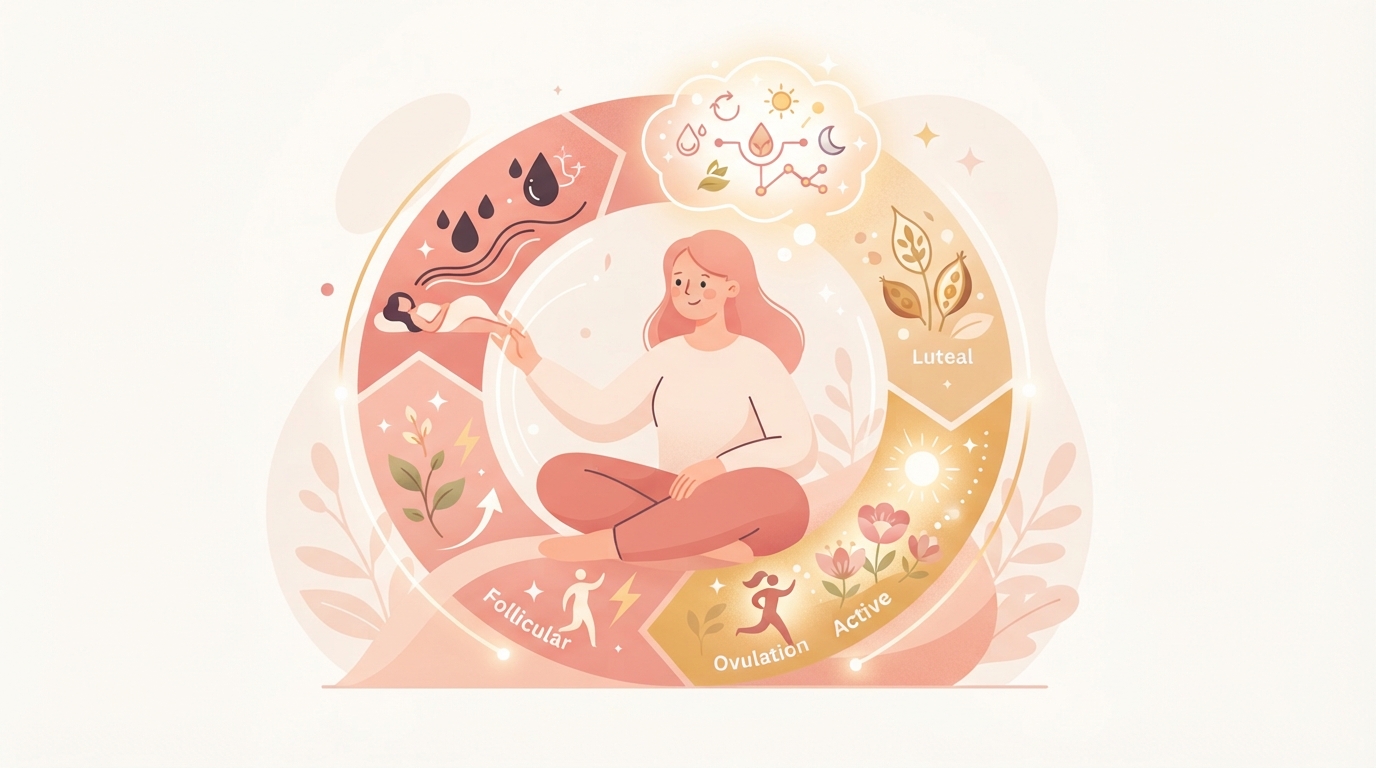
While the average cycle is 28 days, it’s perfectly normal for it to range between 21 and 35 days. Throughout this time, your body transitions through four key phases.
1. The Menstrual Phase
This phase begins on the first day of your period. It occurs when an egg from the previous cycle isn't fertilized, causing estrogen and progesterone levels to drop. The thickened lining of the uterus, which was prepared for pregnancy, is shed.
- What to expect: You may experience cramping, fatigue, and lower back pain. It's a time for rest and self-care.
2. The Follicular Phase
The follicular phase also starts on day one of your cycle (overlapping with menstruation) and ends when you ovulate. During this time, the pituitary gland releases follicle-stimulating hormone (FSH). This hormone prompts your ovaries to produce several small sacs called follicles, each containing an immature egg. Eventually, one healthy egg becomes dominant.
- What to expect: As estrogen levels rise, you’ll likely feel an increase in energy, improved mood, and heightened mental clarity.
3. The Ovulation Phase
Ovulation is the main event of your cycle. Rising estrogen levels trigger a surge in luteinizung hormone (LH), which causes the dominant follicle to release its mature egg into the fallopian tube. This typically happens around the midpoint of your cycle.
- What to expect: You are most fertile during this brief window (about 24 hours). Some people notice an increase in libido, slight pelvic twinges (mittelschmerz), or changes in cervical mucus.
4. The Luteal Phase
After ovulation, the ruptured follicle transforms into the corpus luteum, which secretes progesterone and some estrogen. These hormones keep the uterine lining thick and ready for a potential fertilized egg. If pregnancy doesn't occur, the corpus luteum withers, hormone levels plummet, and the cycle begins again.
- What to expect: This is the phase often associated with Premenstrual Syndrome (PMS). You might experience bloating, breast tenderness, or irritability as your body prepares for the next cycle.
Why Tracking Your Cycle Matters
According to the American College of Obstetricians and Gynecologists (ACOG), your menstrual cycle can be considered a "fifth vital sign." Tracking these phases helps you:
- Identify your fertile window if you are trying to conceive.
- Predict when your next period will arrive.
- Monitor symptoms and share accurate data with your healthcare provider.
- Understand why your energy and mood shift throughout the month.
Frequently Asked Questions (FAQ)
How long does a typical menstrual cycle last?
While 28 days is often cited as the "average," most healthy cycles range from 21 to 35 days. Consistency is usually more important than the exact number of days.
Can stress affect my cycle phases?
Yes. High levels of cortisol (the stress hormone) can delay ovulation or even cause you to miss a period entirely, as stress can disrupt the hormonal signaling between your brain and ovaries.
When should I see a doctor about my cycle?
You should consult a healthcare professional if your cycles are consistently shorter than 21 days or longer than 35 days, if you experience extremely heavy bleeding, or if you have severe pain that interferes with daily life.
Take Control of Your Health with Ayla
Understanding your body shouldn't come at the cost of your privacy. Ayla is a privacy-first period and pregnancy tracker that helps you map your cycle phases entirely offline. No data brokering, no tracking—just you and your body's natural rhythms.
Download Ayla today and start your journey toward informed, private health tracking.
Citations:
- American College of Obstetricians and Gynecologists (ACOG). (2015). Menstruation in Girls and Adolescents: Using the Menstrual Cycle as a Vital Sign.
- National Health Service (NHS). (2022). Periods and fertility.
- World Health Organization (WHO). (2023). Sexual and reproductive health.