Third Trimester Survival Guide: Symptoms, Hospital Bag Checklist, and Labor Prep
Reaching the third trimester marks the beginning of the final stretch of pregnancy. Spanning from week 28 through delivery (typically around week 40), this phase is characterized by rapid fetal development and profound physical shifts for the expectant parent.
As your baby grows from the size of an eggplant to a full-term newborn, your body works overtime to nurture and support new life. Alongside the excitement of meeting your baby, the third trimester often introduces physical fatigue, physical discomfort, and questions about when and how labor will unfold.
Preparation is the best antidote to late-pregnancy anxiety. This evidence-based survival guide covers the physiological changes of the final weeks, practical strategies for symptom management, fetal movement tracking, an essential hospital bag checklist, and clinical signs that labor has begun—all while keeping your intimate pregnancy data safe and private.
The Physiology of the Third Trimester: What to Expect
During the third trimester, fetal weight triples, lungs develop surfactant to prepare for breathing air, and bones finish ossifying. To accommodate this rapid growth, maternal physiology undergoes distinct adjustments:
- Circulatory Demands: Blood volume peaks at roughly 40% to 50% above pre-pregnancy levels, placing extra demand on your cardiovascular system.
- Musculoskeletal Shifts: The hormone relaxin increases flexibility in pelvic ligaments and joints to widen the birth canal, which can also contribute to lower back instability and joint laxity.
- Diaphragmatic and Bladder Compression: The expanding uterus pushes your stomach and intestines upward against the diaphragm, reducing lung expansion capacity while simultaneously pressing downward on the urinary bladder.
Common Third Trimester Symptoms and Relief Strategies
Understanding what causes common late-pregnancy symptoms helps you differentiate between normal discomforts and issues requiring clinical evaluation.
1. Braxton Hicks Contractions vs. True Labor
Starting in the late second or early third trimester, many individuals notice sporadic, painless tightening across the abdomen known as Braxton Hicks contractions.
- What they feel like: Irregular, dull tightness that does not increase in intensity or frequency over time.
- How to manage them: Change your position, take a slow walk, or drink a large glass of water. Braxton Hicks contractions are frequently triggered by mild dehydration and typically subside with rest and rehydration.
- When they differ from true labor: Real labor contractions become progressively stronger, longer, and closer together regardless of movement or hydration.
2. Pelvic Girdle Pain and Sciatica
As relaxin softens connective tissue and the fetal head drops lower into the pelvis, many expectant parents experience Pelvic Girdle Pain (PGP) or sharp shooting pain radiating down the lower back and legs (sciatica).
- Keep your knees together when getting out of bed or exiting a vehicle (the "mermaid movement") to minimize asymmetric strain on the pubic symphysis joint.
- Wear an ergonomic maternity support belt to redistribute abdominal weight across your hips and spine.
- Incorporate gentle prenatal stretches, such as pelvic tilts and cat-cow poses, to alleviate pressure on the sciatic nerve.
3. Shortness of Breath and Heartburn
Because the uterus displaces digestive organs and limits diaphragm excursion, gastric reflux and breathlessness are prevalent between weeks 28 and 36.
- Eat smaller, nutrient-dense meals throughout the day rather than two or three large meals.
- Avoid lying flat immediately after eating. Elevate your head and torso by 30 to 45 degrees using pillows or a sleep wedge.
- Sleep on your left side (the SOS—Sleep on Side position) to maximize blood flow to the placenta and inferior vena cava.
4. Swelling (Edema) vs. Preeclampsia Warning Signs
Mild swelling in the ankles, feet, and fingers is normal toward the end of the day due to fluid retention and venous compression. However, sudden or severe swelling can signal preeclampsia, a serious hypertensive disorder of pregnancy.
- Normal Edema: Gradual swelling that improves with elevation, rest, and adequate hydration.
- Red Flag Symptoms: Sudden swelling in the face or hands, persistent severe headaches that do not respond to acetaminophen, visual changes (flashing lights, blurriness), or sharp pain under the right ribs. Contact your healthcare provider immediately if you notice any of these signs.
Fetal Movement: Why and How to Track Kick Counts
Monitoring your baby's movement is one of the most direct, non-invasive indicators of fetal well-being during the third trimester. Clinical organizations such as the American College of Obstetricians and Gynecologists (ACOG) and the UK National Health Service (NHS) emphasize that healthy babies move consistently right up until and during labor.
The Myth of "Babies Slowing Down"
A common misconception is that babies run out of room and stop moving as birth approaches. While the nature of the movements evolves from sweeping kicks to rolls, nudges, and stretches, the overall frequency and strength of movements should never decrease.
How to Count Kicks (The 10-Movement Rule)
Beginning at week 28 (or week 26 if carrying multiples or managing high-risk factors), establish a daily routine for kick counting:
- Pick a Consistent Time: Choose a period when your baby is typically active, often after a meal, a cold drink, or in the evening when you are resting quietly.
- Get Comfortable: Lie on your left side or recline comfortably with back support.
- Count Every Movement: Count each distinct kick, flutter, roll, or swish (hiccups do not count, as they are involuntary reflexes).
- Target: You should feel at least 10 distinct movements within 2 hours. Most active babies reach 10 movements in under 30 minutes.
If your baby has not reached 10 movements in 2 hours, or if you perceive a significant decrease or change in their usual baseline pattern, do not wait. Contact your obstetrician, midwife, or local Labor and Delivery triage unit right away. Never rely on home Doppler devices to check heartbeats when movement has decreased.
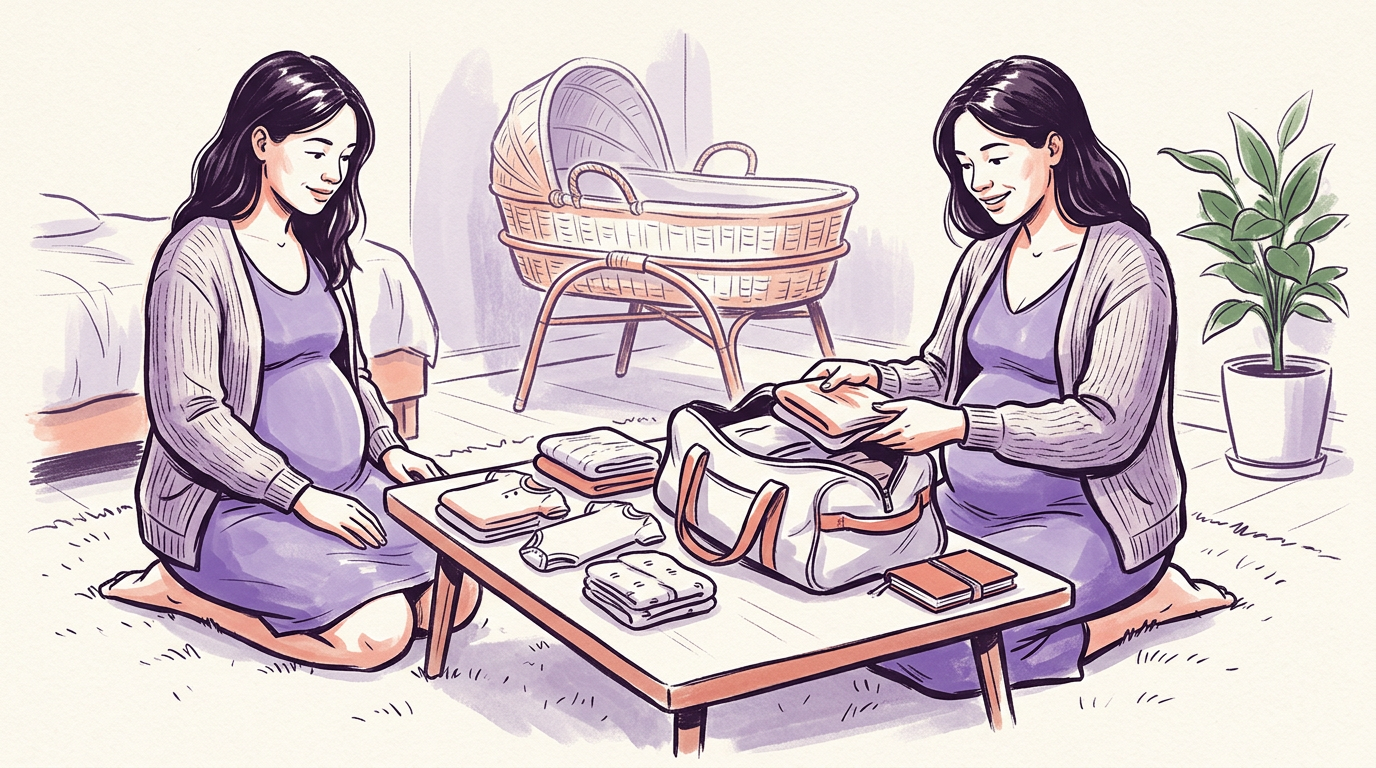
The Ultimate Hospital Bag Checklist: What You Actually Need
Packing your hospital bag by weeks 34 to 36 ensures you are prepared if labor starts ahead of schedule. While hospitals and birth centers provide basic clinical supplies, having personal essentials brings immense comfort to your labor and recovery.
For the Birthing Parent
- Essential Documents: Photo ID, health insurance cards, hospital registration forms, and printed copies of your birth plan or preferences.
- Labor Comfort: Loose, breathable birthing gown or oversized t-shirt, warm non-skid socks or slippers, hair ties, and moisturizing lip balm.
- Postpartum Care: Two or three high-waisted, stretchy cotton or disposable postpartum briefs, nursing bras (wire-free), and soft pads or peri rinse bottle (if you prefer personal brands).
- Toiletries: Travel-sized shampoo, body wash, toothbrush, toothpaste, deodorant, and hydrating facial mist.
- Electronics: Extra-long (6–10 ft) charging cords for your phone or tablet, portable power bank, and a wireless speaker or headphones for calming audio.
- Going-Home Outfit: Soft, loose-fitting joggers, lounge pants, or a nursing-friendly maxi dress. Plan for clothing that fit comfortably around a 6-month pregnancy bump.
For the Baby
- Clothing: Two to three soft onesies or kimono-style sleepers (pack one in Newborn size and one in 0–3 Months size).
- Swaddle & Blanket: A breathable cotton or muslin swaddle for warmth in air-conditioned hospital rooms.
- Outer Layer: Weather-appropriate hat and mittens (to prevent fingernail scratches).
- Pediatrician Information: Contact details for the pediatrician or clinic chosen for baby's initial checkups.
- Car Seat: A properly installed, rear-facing infant car seat inspected prior to your delivery date. Hospitals cannot legally discharge your newborn without an approved car seat.
For the Birth Partner or Support Person
- Clothing & Toiletries: Two comfortable changes of clothes, toiletries, and light layers (hospital rooms can fluctuate in temperature).
- Nutrition: High-protein snacks (nuts, granola bars, dried fruits) and reusable water bottles.
- Rest Essentials: A travel pillow, light blanket, and eye mask for napping between contraction stages.
- Payment Methods: Small cash for vending machines, credit cards, and parking passes.
Recognizing the Signs of Labor: When Is It Time?
As your estimated due date nears, your body begins subtle hormonal preparations for delivery. Knowing how to identify labor signs helps you make calm, informed decisions about when to head to your birthing facility.
1. Pre-Labor Signs (Days to Weeks Before Delivery)
- Lightening ("The Drop"): The baby's head settles deeply into your pelvis. You may notice less pressure on your diaphragm and easier breathing, accompanied by increased bladder frequency.
- Loss of the Mucus Plug / Bloody Show: As the cervix softens and thins (effaces), the protective plug of mucus sealing the cervical canal releases. It may appear as pink, brown, or blood-tinged discharge. This indicates cervical ripening, though active labor may still be days away.
- Nesting Instinct & Digestive Cleansing: Sudden surges of energy to organize the home, often paired with loose stools as prostaglandins naturally soften the bowels.
2. Active Labor Indicators
- Spontaneous Rupture of Membranes ("Water Breaking"): Occurs in only about 10% to 15% of pregnancies before contractions begin. It can feel like a sudden gush or a persistent, warm trickle. Note the TACO details to report to your provider: Time, Amount, Color (should be clear or pale straw-colored), and Odor.
- Progressive Contractions: Unlike Braxton Hicks, true labor contractions originate in the lower back and radiate across the abdomen. They feel like intense menstrual cramps that grow progressively stronger, longer, and closer together over time.
The 5-1-1 Rule
Most obstetric providers and midwives recommend heading to the hospital or birthing center once you reach the clinical 5-1-1 rule:
- Contractions are occurring 5 minutes apart (measured from the start of one contraction to the start of the next).
- Each contraction lasts at least 1 minute in duration.
- This consistent pattern has continued for at least 1 full hour.
Note: If you have tested positive for Group B Streptococcus (GBS), if your water has broken, if you experience vaginal bleeding, or if you have a history of rapid previous deliveries, contact your care team immediately regardless of the 5-1-1 timeline.
Protecting Your Privacy During the Final Stretch
The journey into parenthood is deeply personal. Yet, in the digital economy, pregnancy is among the most commercially exploited lifecycle events.
Commercial data brokers aggressively track pregnancy search queries, baby registry signups, and cloud-based mobile apps. These profiling firms compile dossiers on expectant parents—inferring due dates, health conditions, and purchasing vulnerabilities—which are then sold to programmatic advertising exchanges, infant formula manufacturers, and insurance marketing brokers.
Furthermore, cloud-based contraction and kick counters often transmit your real-time physiological logs to remote servers equipped with third-party tracking software development kits (SDKs).
The Offline-First Advantage with Ayla
Protecting your peace of mind in the third trimester means choosing digital tools that prioritize privacy:
- Zero Remote Server Storage: Ayla operates on an offline-first architecture. All your kick count histories, contraction timings, birth plans, and health notes remain securely inside your phone's encrypted hardware sandbox.
- No Behavioral Ad Trackers: Ayla contains no third-party marketing SDKs, trackers, or commercial advertising libraries. Your pregnancy milestones are never monetized or exposed.
- Complete Data Autonomy: You retain full ownership of your records. Export your symptom logs securely for your obstetrician or erase your data at any time without leaving digital footprints behind.
Frequently Asked Questions (FAQ)
When should I start tracking fetal kick counts?
Most healthcare guidelines recommend beginning daily kick counts at 28 weeks of gestation. If your pregnancy is categorized as high-risk or if you are carrying twins, your healthcare provider may suggest starting as early as 26 weeks.
How can I tell if my water broke or if it was urine?
Bladder leaks in the third trimester are common due to pelvic pressure. Urine is typically yellowish and smells like ammonia. Amniotic fluid is usually clear, pale straw-colored, or faintly sweet-smelling, and it continues to leak steadily when you stand up or change positions. If you are unsure, put on a dry sanitary pad and contact your midwife or labor ward to perform a quick pH test.
What is the difference between true contractions and Braxton Hicks?
Braxton Hicks contractions are irregular, stay at the same intensity, and typically ease when you rest, hydrate, or walk. True labor contractions occur at predictable intervals, become steadily closer together and more painful, and continue unabated regardless of what you do.
What should I do if my baby's movements decrease?
Decreased fetal movement is an urgent clinical signal that warrants immediate medical assessment. Do not wait until the next day or rely on sugary drinks or home Dopplers. Contact your obstetrician, midwife, or local maternity triage unit right away for a non-stress test (NST) and ultrasound evaluation.
Prepare for Your Birth Confidently and Privately
The final weeks of pregnancy are an incredible time of transformation and bonding. By tuning into your body's signals, preparing your essentials ahead of time, and monitoring your baby's kicks, you can approach labor with clarity and confidence.
Download Ayla today to track fetal kick counts, monitor contraction intervals, and organize your pregnancy milestones privately on your device—with zero tracking and complete data security.
Citations:
- American College of Obstetricians and Gynecologists (ACOG). (2023). How to Tell When Labor Begins.
- American College of Obstetricians and Gynecologists (ACOG). (2022). Fetal Movement Counting.
- National Health Service (NHS). (2023). Signs that Labour Has Begun.
- National Health Service (NHS). (2023). Your Baby's Movements in Pregnancy.
- Royal College of Obstetricians and Gynaecologists (RCOG). (2022). Your Baby's Movements in Pregnancy.
- World Health Organization (WHO). (2018). WHO Recommendations: Intrapartum Care for a Positive Childbirth Experience.